
Patrik Orcutt 10.23.25

Welcome back to Part 5 of this multi-part piece I’m writing on my recent canoe trip down the West Branch Penobscot River. If you have not already, I would highly recommend reading Parts 1-4 before diving into this one below.
This trip was not sponsored by anyone, but I would like to thank Old Town Canoe for getting me a Discovery 158 I used for this trip and Jetboil for hooking me up with Flash 1.0 Fast boil system to cook a lot of my meals and make my coffee.
Canoe Coverage on AllOutdoor

Going Down the River
When paddling the West Branch, you’re quickly enveloped by a pristine, forested corridor while being flanked by towering pines and hardwoods, with the river’s clear waters reflecting the rugged beauty of the surrounding North Maine Woods. The absence of development creates a profound sense of solitude, interrupted only by the rhythmic dip of your paddle or the occasional roar of rapids. I find that it’s so easy to relax out here and unwind with these surroundings and unplug from daily emails and meetings. The fact that the entire area West of Millinoket is a cell phone dead zone certainly helps to. While some may look at this being a negative, I have always found that the lack of external communication in rugged and remote places often enhances my experience and connection to it.

Birds on the River
There was certainly no lack of wildlife on the river as we passed numerous Great Blue Herons in the early hours of our trip. In Northern Maine, Great Blue Herons are a common sight along the West Branch Penobscot River, Lobster Lake, and Chesuncook Lake, where shallow waters and abundant fish like brook trout and salmon support their diet. These large wading birds can stand between 3–4.5 feet tall with a wingspan up to 6.6 feet, and are known for their slate-blue plumage, long, pointed bill, and graceful S-shaped neck.

Another common bird to see along the river was the Kingfisher. This medium-sized bird can be about 11–14 inches long, with a shaggy crest, large head, and stout, pointed bill, known for its rattling call and vibrant blue-gray plumage with a white collar. They love rivers like this that provide ideal hunting grounds for species like small brook trout and minnows. Their Rattling calls echoed across remote waterways as we paddled down them. Another very common bird to see was the Bald Eagle; we probably saw a dozen of these guys during the day, but I never got a good picture of them. At one point, we were lucky enough to watch one dive bomb what I’m assuming was a small fish in the river, but the Eagle unfortunately came up empty-handed.
Thoreau’s Island

The River is dotted with campsites, and the first one we came across was Thoreau’s Island. Can you guess why? Nevertheless, it’s cool to see him getting his name on a unique campsite along the river he famously wrote about. This campsite offered a surprising amount of facilities for being out in the middle of nowhere and only being accessible by river. Sporting both an outhouse and a coverable picnic table, the site was much nicer than I had anticipated. There was also a fire pit and a few nice places to set up a tent.


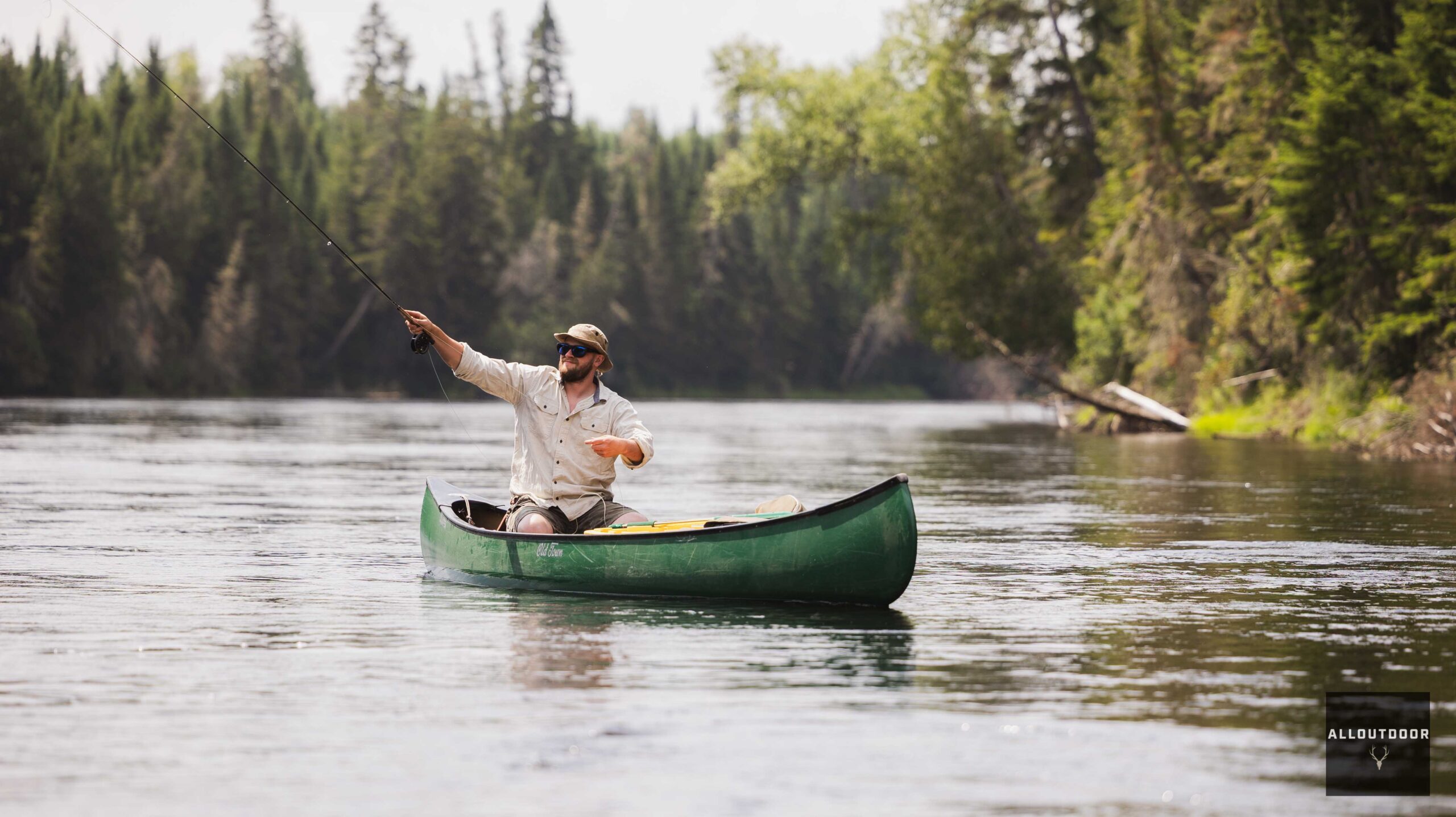
After our quick break at Thoreau’s Island, we were back on the river, and Ridge decided to whip out his fly fishing pole after spotting several fish jump out of the water. With the West Branch Penobscot being a cold, well-oxygenated river, it’s ideal for supporting Salmon, Brook Trout, and Smallmouth Bass, among many other freshwater fish.

After 30 minutes of fishing while also slowly floating down the river, we decided it was time for some lunch as noon was swiftly approaching. We pulled our canoes to the side of the river and tied them off for a quick bite to eat and then set off for what would be a long afternoon of paddling. As the miles added up, so did the old stories the Ridge and I recounted to each other about our past shenanigans. We often talked of the College days and how we never knew how good we had it back then.


After close to 17 miles of Canoeing and with only 3 more miles to go to the end of our route, we were both pretty exhausted. Most of the day, the river had been nice to use with fast currents and small rips to push us along our journey. Unfortunately, we hit a 1-mile stretch where the river opened up and the winds had shifted against us, making paddling very difficult. At this point, I remember Ridge calling over to me, saying it was “time for a steak and some whiskey,” and I couldn’t agree more. So there, after 17 miles, we decided to call it at Pine Stream campground.


While eating dinner, Ridge and I thought we noticed what looked like a moose across the river from our campground. We stared at it for a few minutes and decided it was nothing. Later on, we thought we noticed something again, and sure enough, there was a Cow in the river getting a drink of water. Keep in mind the river had widened out significantly at this point, so we were probably close to 700 meters away from this moose. After dinner, I decided to grab my camera and hop in the canoe and very quietly paddle near this moose to get a few shots.

After returning to our campsite, Ridge and I shared some beers and some whiskey while fishing with a gorgeous sunset. This will conclude part 5 of the West Branch Penobscot River trip series. If you enjoyed this, please be on the lookout for part 6, where we battle the elements on our final push down the river.


Trending Products