

Welcome back if you have been following along! Last time around, we covered the variations of the Winchester Model 1894 in Part II, and before that the history in Part I. Today, we are tackling what might be the trickiest part of owning a Winchester 94: dating it. Let’s get into it!
Curious Relics Coverage on AllOutdoor
Welcome to our recurring series of “Curious Relics.” Here, we want to share all of our experiences, knowledge, misadventures, and passion for older firearms that one might categorize as a Curio & Relic – any firearm that is at least 50 years old according to the ATF. Hopefully along the way you can garner a greater appreciation for older firearms like we do, and simultaneously you can teach us things as well through sharing your own expertise and thoughts in the Comments. Understanding the firearms of old, their importance, and their development which lead to many of the arms we now cherish today is incredibly fascinating and we hope you enjoy what we have to share, too!
Dating: Winchester Model 1894
Dating Winchester Model 1894 rifles comes with challenges. Over 7 million guns were produced across 130+ years. A significant portion of Winchester’s factory records were destroyed in a 1959 fire. The hardest part is that getting verified information involves spending money, specifically for factory letters from the Cody Firearms Museum.
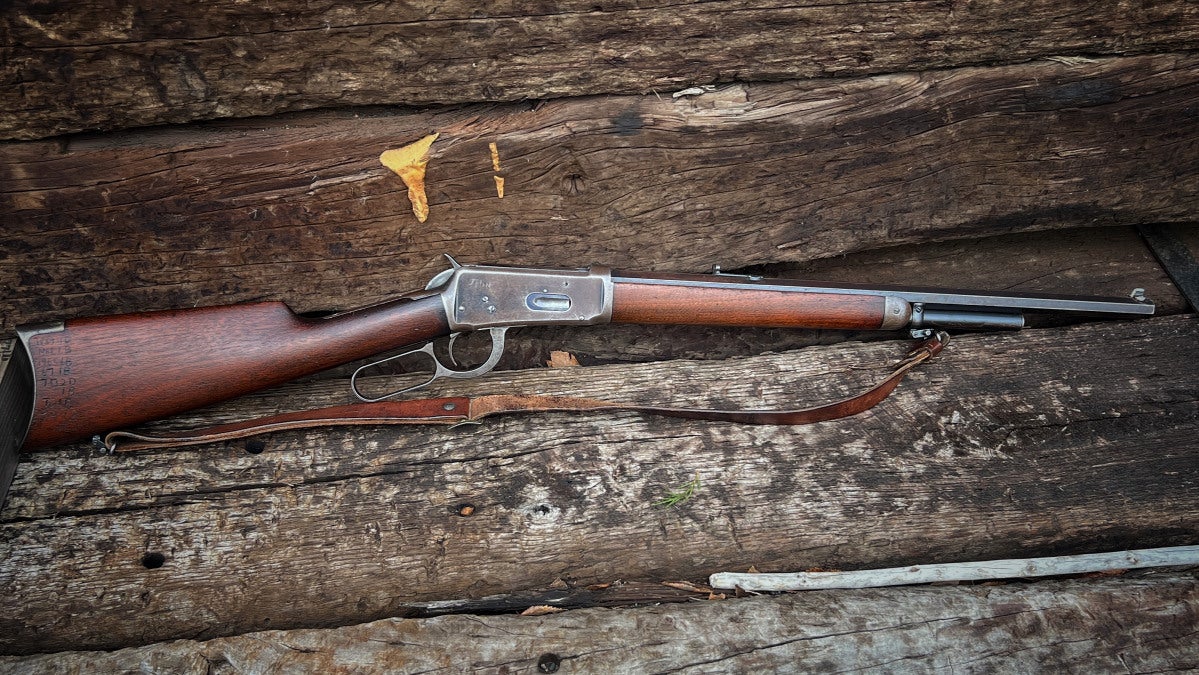
Let me give you a personal example. This specific gun has always been in my family’s lore. It is “Grandpa’s 32-40.” As kids, me and my cousins always heard about it. When my grandfather passed, the oldest grandson inherited the 32-40. I made an effort to get the Cody Firearms Museum documentation, and since we all care about this extension of him, I pursued it.

The Cody Museum can provide factory letters for Winchester firearms based on their surviving warehouse records. They charge fees based on what records are available. Currently $80 for full configuration letters on pre-1907 guns, $40 for date-only SNA records on later guns, plus shipping. For this specific rifle, the letter told us:
- Type: Rifle
- Caliber: 32-40
- Barrel Type: Octagon
- Trigger: Plain
- Received in warehouse on November 04, 1905
- Shipped from warehouse on November 10, 1905, Order number 36635
Limited information but still far more specific than just a year next to a serial number range. We have always wondered if this specific gun was modified from a rifle to a carbine, if it had a longer magazine tube, or other changes. All of which would have happened before my grandfather came up with it in the early 1950s. Winchester made custom orders pretty effortless so it is hard to say what might have been changed after it left the factory.
The Factory Records Situation
Based on research by Winchester collectors and historians like Bert Hartman who have studied the Cody Firearms Museum archives, here is what actually exists:
- Serial Numbers 1 through 353,999: Complete original factory warehouse ledger records exist at the Cody Firearms Museum. These are accurate and can include details like barrel type, sights, caliber, ship dates, etc.
- Serial Numbers 354,000 through roughly 2,600,000+: Destroyed in the fire. These guns fall into a black hole where we have to rely on less reliable sources, educated guesses, or conjecture.
- Polishing Room Serialization Records: These survive up to serial number 1,352,066 dated December 29, 1945. They give dates guns were serialized but apparently not configuration details.
- Post-1964 Records: Better documentation exists for guns made after 1964, but even then it is not perfect.
The George Madis Situation
A bit awkward of a topic but worth touching. If you have ever looked up Winchester serial numbers online, you have probably encountered information that traces back to George Madis. He published “The Winchester Book” in 1961 and later “Winchester Handbook,” both of which included serial number date charts. Here is the issue: his information has proven to be notably inaccurate when compared to the actual factory records. Off by years in many cases. Sometimes off by a decade or more.

“The Winchester Book.” AbeBooks, www.abebooks.com/Winchester-Book-MADIS-George-Art-Reference/31839859274/bd. Accessed 13 Oct. 2025.
Researcher Bert Hartman spent years at the Cody Firearms Museum comparing Madis’s published serial number ranges against actual factory records. Despite this, Madis’s data has been copied and republished for over 60 years. It shows up in books, on websites, in PDFs. Even Winchester’s own published serial number chart was based on old Madis data. The CFM will always be the best bet and better yt any money you throw their way the better cause they are great.
What Resources Actually Work?
Cody Firearms Museum Factory Letters: This is the gold standard. They charge a fee, currently ~ $80 for full configuration letters on pre-1907 guns or $40 for date-only SNA records on later guns plus shipping. You submit photos and serial number information. If your gun falls within their surviving records, you will get the information they have available in the form of a Winchester Factory Letter. This is what I did for my grandfather’s rifle.

Winchester Arms Collectors Association (WACA): Membership gets you access to better serial number information and knowledgeable collectors who can help date your rifle. I read that they have done extensive work correcting the Madis errors.

They even have their own data input section. This website appears to use actual record information rather than Madis data. When I cross-referenced my grandfather’s 32-40, WinchesterCollector got it right at 1905. OldGuns.net who is my typical go-to first stop when looking for dating resources, called it 1903. That two-year difference matters when you are trying to figure out if you have got a legal antique or when you are dating transitional features.
Should You Get a Factory Letter?
If you have a Winchester 94 that matters to you, whether it is a family heirloom, early production rifle, or just one you are curious about, consider a Cody Firearms Museum factory letter if your serial number falls within their surviving records. If you are outside that range, use the best available resources like WinchesterCollector.org or connect with the Winchester Arms Collectors Association.

Specifications: Winchester Model 1894
Winchester made a ton of these rifles over a long time. That means specifications are subject to variations, customization, and changes across different eras. What follows are general specifications, but understand that your particular rifle might differ based on when it was made, what configuration it is, and whether it was custom ordered.
- Years Produced: 1894-2006 (original Winchester production), 2010-present (reintroduction under different ownership)
- MSRP (from 1899 catalog): $18 (~$703 in 2025)
- Number Manufactured: Over 7.5 million
- Operating System: Lever action
- Standard Calibers: 30-30 Win, 32 Win Special, 38-55 Win, 25-35 Win, 32-40 Win, 7-30 Waters (plus others in limited production)
- Barrel Lengths: 20 inches (carbine), 24 inches, 26 inches (rifle), custom lengths available
- Overall Length: carbines around 37-38 inches, rifles 42-45 inches
- Weight: 6.5-7.5 lbs
- Magazine Capacity: 5-8 rounds (pending barrel length and caliber)
- Stock Styles: Straight grip, semi-pistol grip, various wood grades
- Sights: Buckhorn rear/blade front (standard), tang-mounted peep sights (optional), various other configurations
- Action: Top eject (1894-1982), angle eject (1982-2006)
Specifications: My Gun
- Year Made: 1905
- MSRP (from 1905 catalogs): ~$12 (~$450 in 2025)
- Barrel Type: Octagon
- Operating System: Lever action
- Standard Calibers: 32-40 Win
- Barrel Lengths: 20 inches
- Magazine Capacity: 5 rounds
- Stock Styles: Straight grip
- Sights: Buckhorn rear/blade front
- Action: Top eject
After Market Parts & Accessories: Winchester Model 1894
Here is where things get monumental. Winchester made these rifles for so long and in such quantity that basically every reliable parts resource has something available. The challenge is not finding parts – it is finding the right parts for your specific configuration.
Pre-64 and post-64 parts are not always interchangeable. The 1964 redesign changed internal dimensions and manufacturing methods. If you have a pre-64 rifle, stick with pre-64 parts when possible. Mixing eras can lead to function problems or fitting issues. Always test-fit before you start modifying anything permanent.
- Midwest Gun Works: Has a lot of new reproduction parts. Good source if you need functional replacements and are not worried about maintaining collector-grade originality.
- Numrich Gun Parts Corp: This is the mountain. Numrich has an absolute pile of Winchester 94 parts at the moment. Mainly focused on post-64 stuff, but they have a decent amount of pre-64 parts as well. Check their site frequently because inventory changes.
- Jack First Gun Parts: Has a ton of parts. Very similar to Numrich but less hyper-specific on model designations beyond basic pre-64 and post-64 distinctions. Good if you know what you need but do not want to wade through fifty sub-variations.
- Homestead Firearms Parts: Onesie twosies of used parts, but they have pretty specific hard-to-find pieces. Think of this as a more organized eBay. Good resource when you need that one weird part nobody else has.
- Old Arms of Idaho: Similar concept to Homestead but with a better organized website. They have more generalized parts and the site is easier to navigate when you are trying to figure out what fits what.
- CFN Parts (cfnparts.com): Has a good variety of part listings, but a lot of them are out of stock. Probably the parts you actually need. Still worth checking because when they have something, it is usually correct.
- eBay: Always worth searching. Original parts, reproduction parts, complete actions, random small parts – it is all there. Just know what you are looking for and what it should look like.
Accessories for the Winchester 94 are sort of endless, although they tend to be more modern in fashion if that makes sense. Not gonna see a bunch of cool vintage style pieces out on selves.
- Stocks: Boyd’s makes replacement stocks in various configurations. Midwest Industries and Ranger Point Precision both make tactical-style furniture if that is your thing.
- Sights: Skinner brand peep sights are popular upgrades. Red dot mounts are available. Overhang scout scopes and long eye relief scope setups are common. Traditional tang-mounted peep sights can still be found.
- Leather Goods: Amazon has all sorts of leather slings, butt cuffs, cartridge holders, and saddle scabbards. Quality varies wildly.
- General Accessories: Sling swivels, recoil pads, magazine extensions, lever wraps – if you can think of it, somebody probably makes it for the Winchester 94.
End of Part III: Winchester Model 1894
Well, ladies and gentlemen, we are closing out the third part of our Winchester Model 1894 series. Dating these rifles is genuinely challenging due to destroyed records and bad information floating around the internet. Parts and accessories are plentiful, but you need to know what configuration you have and what era it came from. Next time we will wrap this series up with range time and final conclusions about why this rifle earned its legendary status.

In closing, I hope our Curious Relics segment informed as well as entertained. This all was written in hopes of continued firearm appreciation and preservation. We did not just realize how guns were supposed to look and function. It was a long and tedious process that has shaped the world we live in. So, I put it to you! Is there a firearm out there that you feel does not get much notoriety? What should our next Curious Relics topic cover? As always, let us know all of your thoughts in the Comments below! We always appreciate your feedback.

Trending Products