
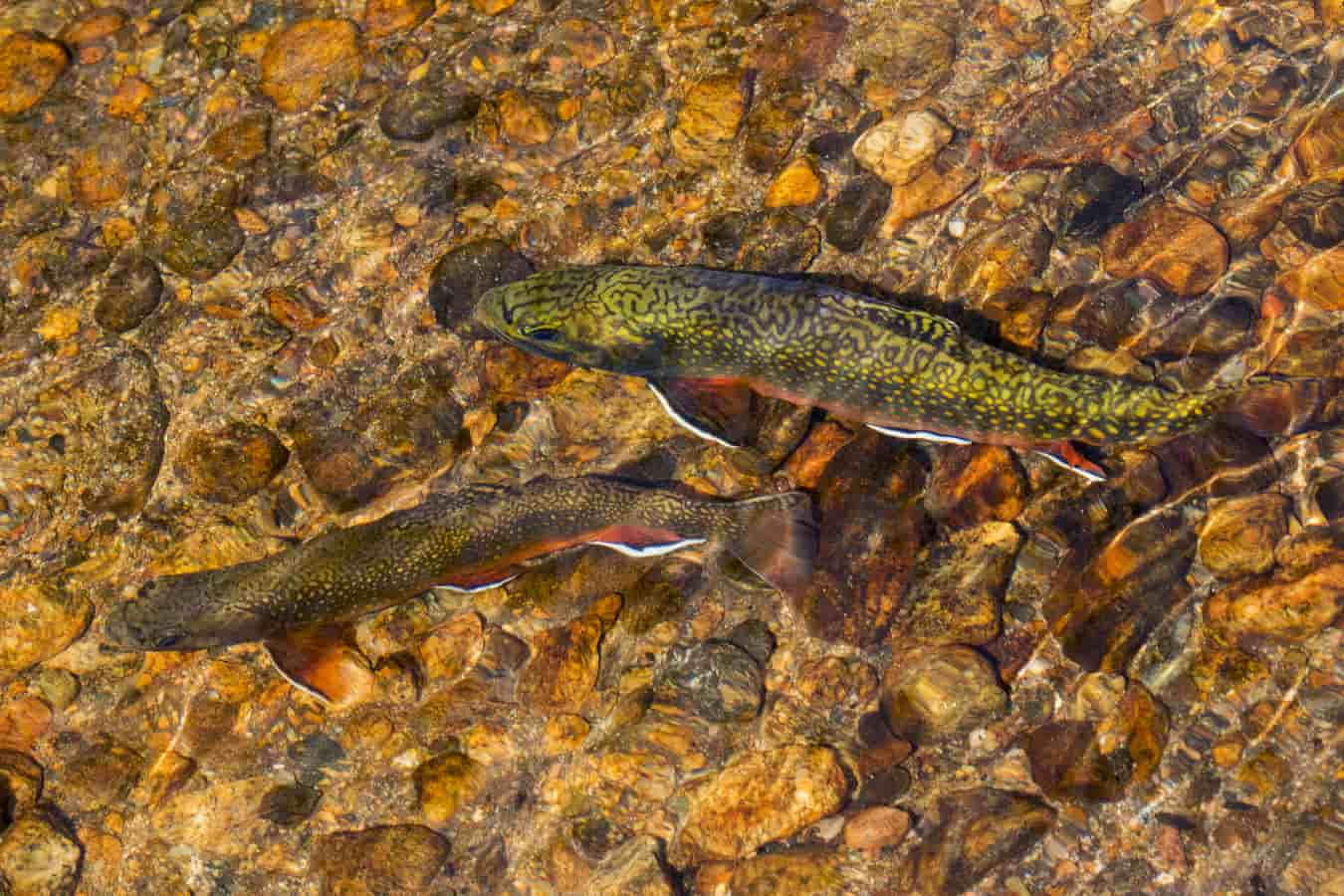
The largest annual investment through the Chesapeake Bay Stewardship Fund sends $812,000 to Trout Unlimited for native brook trout habitat in the Potomac headwaters. Image by Danita Delimont
The National Fish and Wildlife Foundation (NFWF) and the U.S. Environmental Protection Agency (EPA) on February 11 announced $44.2 million in grants for water quality and habitat restoration across the Chesapeake Bay watershed. The 72 grants, awarded through the Chesapeake Bay Stewardship Fund’s Innovative Nutrient and Sediment Reduction (INSR) and Small Watershed Grants (SWG) programs, will leverage nearly $31 million in matching contributions for a total conservation impact of $75 million.
For fly anglers in the Mid-Atlantic, the headline number matters less than a single line item: an $812,132 grant to Trout Unlimited (TU) to reconnect and restore aquatic habitat in eastern brook trout strongholds along the North Branch of the Potomac River in West Virginia and Maryland.
What TU’s Grant Will Do
The North Branch project targets sediment and nutrient pollution—the two forces that do the most damage to coldwater fisheries in the region. TU will install more than two miles of agricultural exclusion fencing and riparian plantings to keep cattle out of tributaries that feed the main stem. The grant also funds the restoration of 32 acres of riparian forest habitat and agricultural conservation practices on 250 acres of farmland.
These are practical, proven measures. Exclusion fencing drops sediment loading in short order; riparian buffers shade water, filter runoff, and rebuild the insect communities that trout depend on. The 250 acres of agricultural best management practices address nutrient loads further upslope.
A River That Came Back from the Dead
The North Branch is one of the more striking comeback stories in eastern fly fishing. Through the mid-1990s, acid mine drainage from abandoned coal operations in Garrett County, Maryland, and neighboring West Virginia had rendered long stretches of the river biologically dead. Water pH dropped below levels that could sustain aquatic insects, let alone trout.
Beginning in 1993, the Maryland Department of the Environment installed a series of limestone dosers—mechanical devices that crush and dispense calcium into tributaries to neutralize acidity. By 1994 the water could again support fish. Maryland’s Department of Natural Resources launched stocking programs, and within a few years wild brook trout and brown trout were reproducing naturally in the tailwater below Jennings Randolph Lake. The North Branch became the only river east of the Mississippi holding all four salmonid species: brook, brown, rainbow, and westslope cutthroat trout.
That recovery, though, depended on active chemical treatment of the mine drainage. The new TU grant shifts focus to the surrounding landscape—the agricultural pressures that now pose the next tier of threat to water quality in the watershed’s headwater brook trout streams.
The Broader Package
The full $44.2 million award spans six states and the District of Columbia. Collectively, NFWF estimates the funded projects will restore 75 miles of riparian forest buffers, implement 45 miles of livestock exclusion, restore 290 acres of wetland and marsh habitat, and put agricultural best management practices in place on 120,000 acres. The grants are projected to reduce annual nitrogen pollution by one million pounds, phosphorus by 67,000 pounds, and sediment by more than 78 million pounds.
Among the larger awards: Sustainable Chesapeake received $1,999,064 to expand conservation resources for dairy and row-crop farmers across Virginia’s Chesapeake watershed. Ducks Unlimited received $1,163,839 to restore 200 acres of wetlands and 70 acres of buffer habitat on the Delmarva Peninsula. The Nature Conservancy received $898,814 to deploy cover-crop sensor technologies on 20,000 acres in Pennsylvania and Maryland. And the Watershed Alliance of York received $847,682 to accelerate riparian forest buffer planting and freshwater mussel conservation in York County, Pennsylvania.
“Both of these grant programs are part of the larger story of EPA’s investments for the Chesapeake Bay,” said Amy Van Blarcom-Lackey, EPA Region 3 Administrator. The grants also support more than 700 watershed restoration and conservation jobs and will engage over 3,300 volunteers.
Why It Matters Now
The Chesapeake Bay Stewardship Fund has operated since 1999. Over that span, NFWF has awarded nearly 2,000 grants to more than 650 organizations, totaling over $400 million in direct funding and generating more than $800 million in combined conservation impact. This year’s awards advance the commitments outlined in the revised 2025 Chesapeake Bay Watershed Agreement, which sets a 2040 restoration deadline.
For anglers who fish the North Branch—or any brook trout stream in the upper Potomac—the TU grant is a direct investment in the water they wade.
Trending Products