
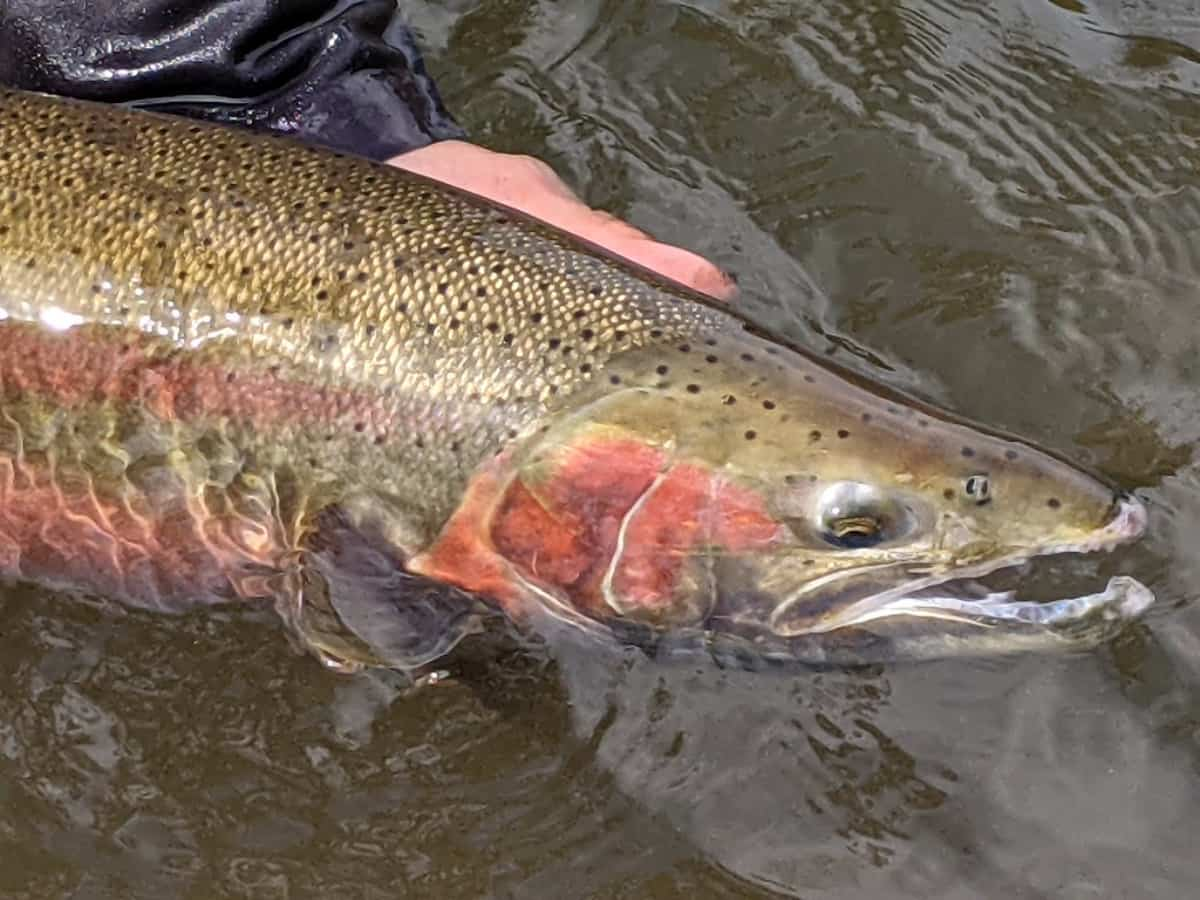

Image by Kent Sanders
The wild steelhead are coming back to the Skagit River. The anglers who’ve waited all year to meet them may not get the chance.
As of mid-January, the highly anticipated catch-and-release season on Washington’s Skagit and Sauk rivers—a bucket-list destination for steelhead anglers across the Pacific Northwest—stands on the verge of cancellation. The culprit isn’t biology. It’s bureaucracy.
According to recent reports from Northwest Sportsman Magazine and PNW Daily, the Washington Department of Fish and Wildlife (WDFW) has not scheduled an opener for the 2026 season. The reason: a $1.6 million funding gap left when the state legislature passed its 2025–2027 operating budget last May without appropriating money for the “Quicksilver Portfolio”—the monitoring, creel surveys, and enforcement package required under federal permit to fish over Endangered Species Act-listed stock.
Healthy Fish, Empty Budget
The bitter irony is that the Skagit’s wild steelhead run looks strong. WDFW’s 2026 forecast projects 4,557 fish returning—a number that typically exceeds the biological threshold needed to authorize a limited catch-and-release fishery. Compare that to the nearby Nooksack River, which closed under Emergency Rule WSR 25-24-050 on January 1, 2026, due to critically low broodstock returns forecasted at just 41 fish.
The Nooksack closure, while painful, follows conservation logic anglers understand and largely support. The Skagit’s situation is different: fish are present, the river is ready, but the state simply hasn’t funded the personnel and programs necessary to legally open the season.
Running Out of Time
The Skagit’s catch-and-release season typically opens in early February, leaving anglers in an agonizing limbo. Trips have been canceled. Guides are fielding calls they can’t answer. As WDFW spokesman Chase Gunnell told Northwest Sportsman, “This is not news anyone was hoping for, WDFW staff included.”
Wild Steelheaders United and Trout Unlimited chapters have pressed legislators for a last-minute fix, but the prospects appear grim. Making matters worse, WDFW didn’t even propose funding for a 2027 season, anticipating another challenging legislative session. For the rural communities that depend on steelhead tourism—Darrington, Marblemount, Concrete—the potential closure represents a significant economic blow during what should be their busiest season.
A Question of Priorities
The economic case for funding the fishery practically makes itself. According to WDFW data, the 2025 season generated 11,222 angler trips and an estimated $2.33 million in local spending—easily exceeding the $1.6 million needed to fund not only this fishery but all Puget Sound salmon and steelhead monitoring covered under the budget line item.
The standoff highlights a growing frustration in Washington’s angling community over how Olympia prioritizes—or fails to prioritize—its river resources. The Quicksilver Portfolio isn’t optional window dressing; it’s the regulatory infrastructure that makes sustainable steelhead fishing legally possible under the 10-year management plan approved by NOAA Fisheries in 2023. Without it, even abundant runs remain off-limits.
For now, anglers can only watch and wait, hoping for a legislative miracle that looks increasingly unlikely. The steelhead, indifferent to state budgets and federal permits, will make their run regardless. Whether anyone will be there to greet them with a fly rod remains an open question.
Trending Products