
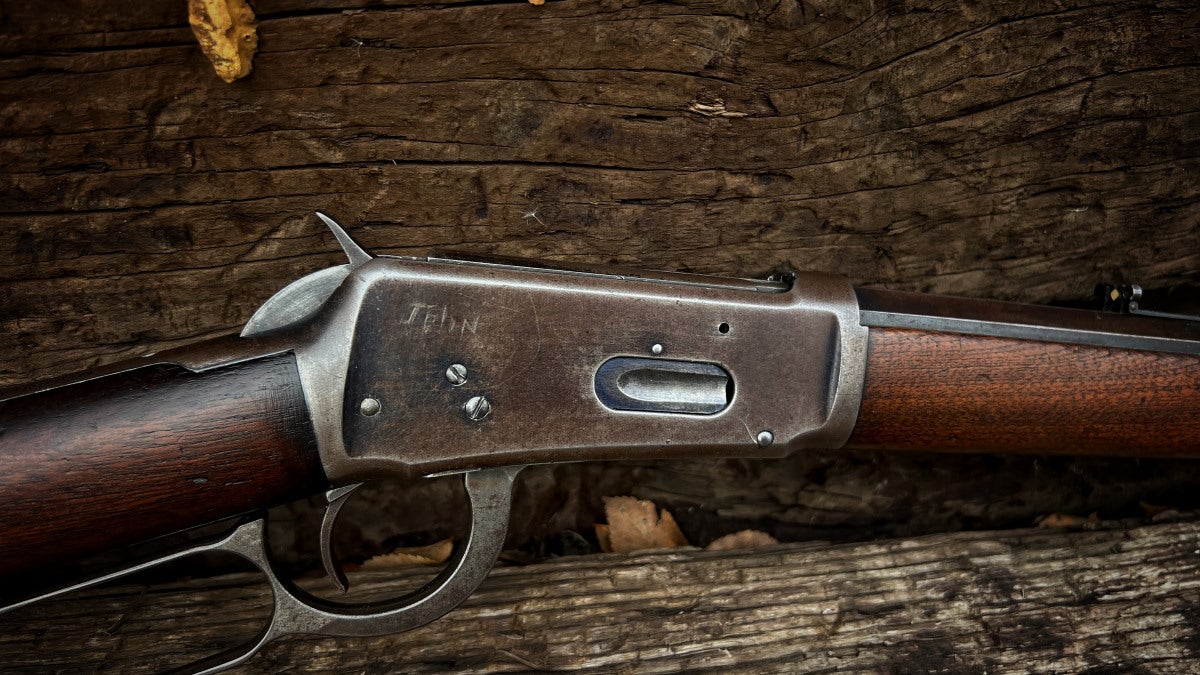

Welcome, if you are a newcomer to this fun bi-weekly segment of AllOutdoor.com! Over the last three parts we have covered the history of the Winchester Model 1894, the variations, and the challenges of dating these rifles along with specifications and parts. Today we are closing out this series with some range time and final thoughts on why this rifle earned its legendary status as America’s deer rifle.
Curious Relics Coverage on AllOutdoor
Welcome to our recurring series of “Curious Relics.” Here, we want to share all of our experiences, knowledge, misadventures, and passion for older firearms that one might categorize as a Curio & Relic – any firearm that is at least 50 years old according to the ATF. Hopefully along the way you can garner a greater appreciation for older firearms like we do, and simultaneously you can teach us things as well through sharing your own expertise and thoughts in the Comments. Understanding the firearms of old, their importance, and their development which lead to many of the arms we now cherish today is incredibly fascinating and we hope you enjoy what we have to share, too!
Range Time: Winchester Model 1894
I have shot my grandfather’s Winchester 94 in 32-40 on three separate occasions. The first time was years back with my grandfather himself using factory 32-40 ammunition. My experience at the time was surprise at how a gun that was so legendary in my family kicked very little. It felt like shooting a pistol cartridge in a lever action. Pretty wimpy, honestly. We shot at a bowling ball, and it barely did anything to it.

Recently, I shot it again, two separate times with both factory reloaded 32-40 brass that I reloaded myself, as well as reformed 30-30 brass that I had formed into 32-40. I have an article on TFB chronicling how to do that reformation process. I do not recommend that anybody do it, but that is what I did. For me, it is a sustainable thing, so my cousin can use it and keep the rifle alive.

Recoil is very low. The action is a little stiff nowadays; it used to be pretty smooth, but we had to replace the carrier in it, and the carrier just needs to be broken in. It was basically a brand new carrier, and these guns were hand-fitted, so it needs some time to wear in properly. The trigger is nothing to write home about. It has got a little bit of creep to it and then a stiff wall with a sudden drop. Functional but not refined by any means.

The sights are standard Buckhorn style, and I have never been a fan of them in any lever-action setting. The rear sights are always a little too wide for my liking and leave a little too much space. I guess for fast target acquisition, it might not be the worst, but I prefer something tighter for precision work.

For my reloads with both the original brass and reformed brass, I used 170-grain round nose flat point bullets moving at around 1320 fps with my powder charge. At 50 yards with the rifle on a bag, I noticed that groupings with the factory brass grouped better than the reformed brass, which probably makes sense. The reformed 30-30 brass is very slightly longer than the original 32-40 brass.

With the original brass, I got groups of about 2.5 to 3 inches consistently. The reformed brass was a lot wilder, anywhere from 3 to 5 inches on average. It was kind of random. For a rifle that is over 120 years old with somewhat improvised ammunition, those results are perfectly acceptable for deer hunting ranges. You are not punching sub-MOA groups with iron sights on a lever action from 1902, but you will hit a deer at woods ranges without any problem.

Final Thoughts: Winchester Model 1894
My takeaway on the Winchester Model 1894 is straightforward: this model probably took more whitetail deer than any other centerfire rifle in history. Not because it is any better or worse than anything else, but because it was the everyman’s gun. It was the Ford Model T of deer rifles. Simple to use, affordable, reliable, and available when it mattered most.

The 30-30 Winchester cartridge paired with the Model 94 carbine became the default deer rifle across much of North America for decades. Lightweight, fast-handling, powerful enough for deer-sized game, and sold everywhere from hardware stores to mail-order catalogs. Winchester made over 7 million of these rifles across 130+ years of production. That kind of market saturation means the Winchester 94 was in more deer camps, more farm houses, and more gun racks than any competing design.

Is it the best lever-action ever made? That is debatable. The Marlin 336 series and Savage 99s have their loyal followings, and plenty of other lever actions have their own advantages. But the Winchester 94 hit the market at exactly the right time with exactly the right features to become the standard against which all other deer rifles were measured for generations.
My Grandfather’s Rifle
As far as my personal connection to my grandfather’s rifle, I am grateful to have access to it. Shooting a rifle that put venison on my family’s table for decades and still works perfectly after 120+ years is a privilege. Those tally marks carved into the buttstock from successful hunts tell a story that goes beyond specifications and serial numbers. I want to give a shout-out to my cousin Joel for trusting me with our grandfather’s rifle for this series. It means a lot that this rifle stays in the family and continues to be used rather than sitting in a safe as a museum piece.

In closing, I hope our Curious Relics segment informed as well as entertained. This all was written in hopes of continued firearm appreciation and preservation. We did not just realize how guns were supposed to look and function. It was a long and tedious process that has shaped the world we live in. So, I put it to you! Is there a firearm out there that you feel does not get much notoriety? What should our next Curious Relics topic cover? As always, let us know all of your thoughts in the Comments below! We always appreciate your feedback.

Trending Products